
Backlit Stone and Onyx: Engineering the Glow Behind Natural Materials
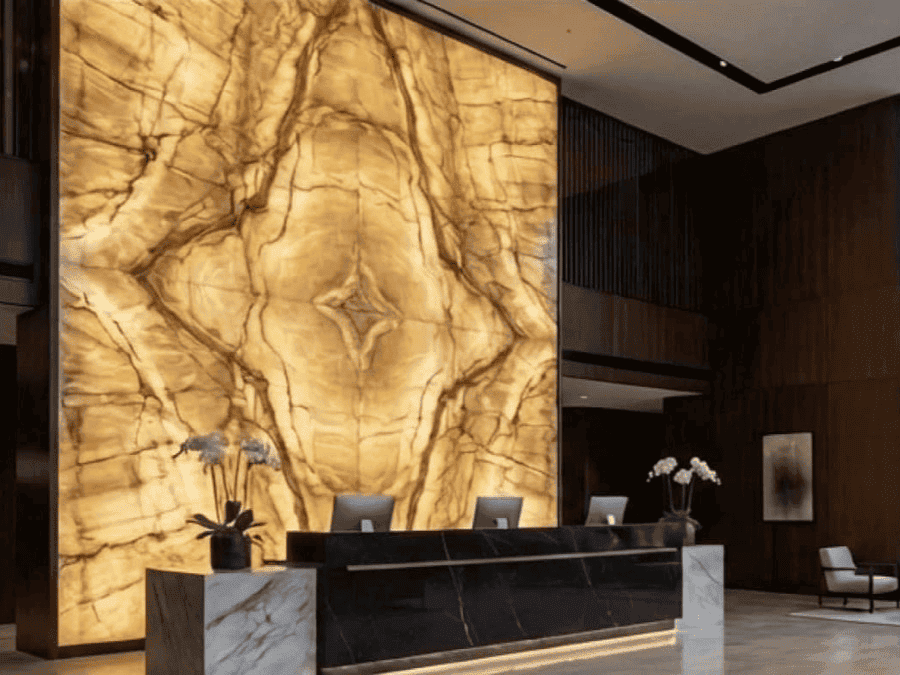
Few materials stop people in their tracks like backlit onyx. A slab that reads as solid, veined stone by day becomes a glowing, luminous centerpiece the moment light passes through it. Reception desks, bar fronts, feature walls — done right, backlit stone is one of the most memorable moves in architectural design. Done wrong, it’s a patchwork of hot spots and dark seams.
The difference is almost never the stone. It’s the light behind it.
Why even illumination is so hard
Natural stone varies in thickness and translucency across a single slab. Point sources — LED strips, dots, modules — telegraph straight through thin areas as bright spots while thicker veins stay dark. The goal is a perfectly uniform plane of light with zero visible structure behind the material.
That’s exactly what our LightPanel System is engineered to deliver: low-voltage LEDs coupled to an optical-grade etched acrylic that spreads light edge to edge with no hot spots, in a profile that starts around a quarter inch thin.
Field-cuttable backlighting changes the math
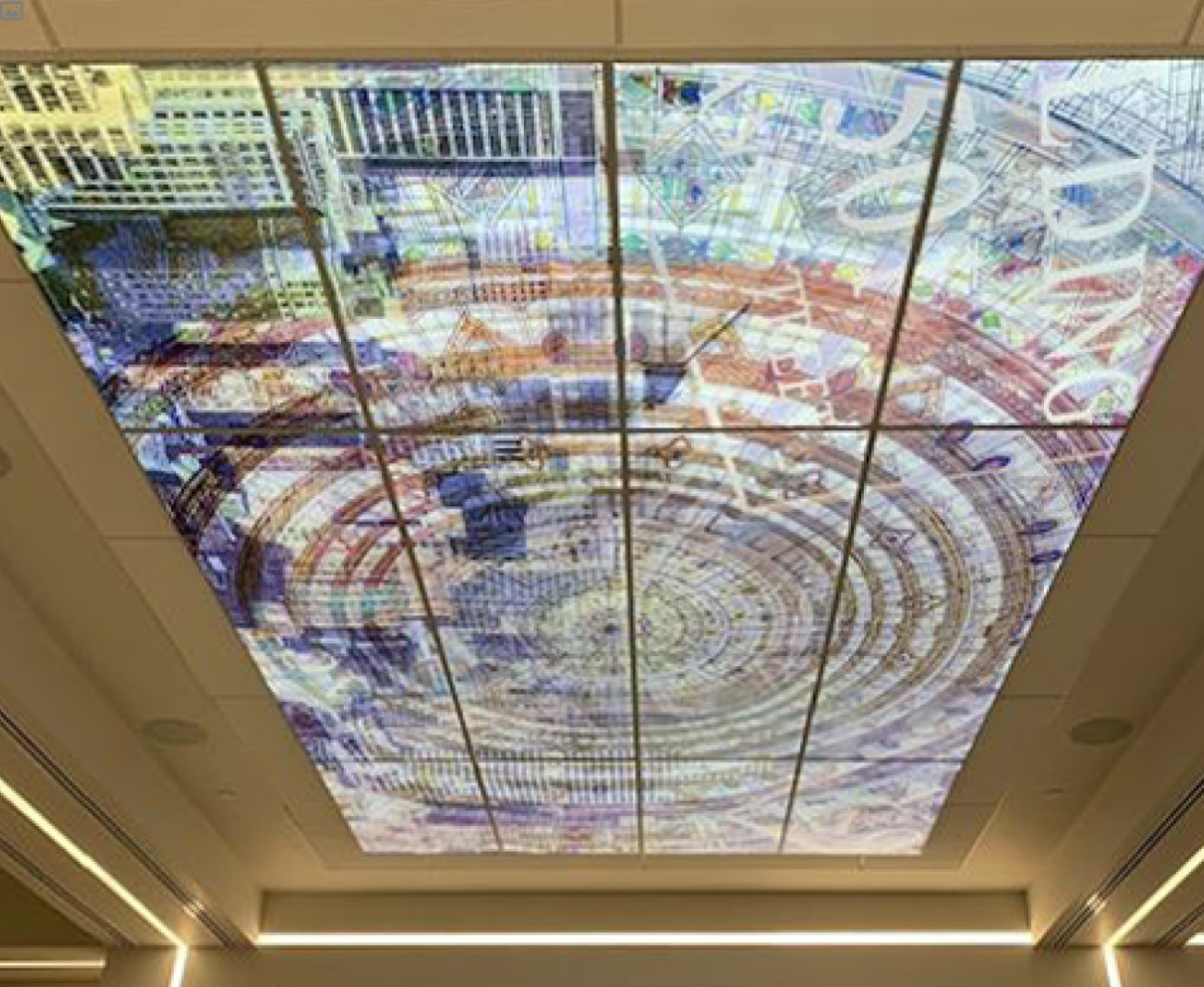
Stone fabricators work in inches, not catalog sizes. Our LightSlab ships flat at 9.4′ × 6.3′ and is trimmed on site to fit the exact opening — so the light panel matches the stone, not the other way around. For curved or oddly-shaped slabs, custom-shape panels follow the geometry.
Getting the color temperature right
Onyx and marble shift character dramatically with color temperature. Warmer light (2700K–3000K) deepens amber and gold veining; cooler light flattens it. Because we bin our LEDs tightly, the white stays consistent across the entire wall — critical when a single spec covers dozens of panels. For projects that want the stone to change mood on demand, RGBW and tunable options are available.
The takeaway
Backlighting stone is a lighting problem disguised as a materials problem. Solve the evenness, thinness, and color consistency, and the material does the rest. If you’re specifying a stone feature and want it to glow like the reference photo — not the disappointing install down the street — talk to your local rep early, while setback depth is still on the table.
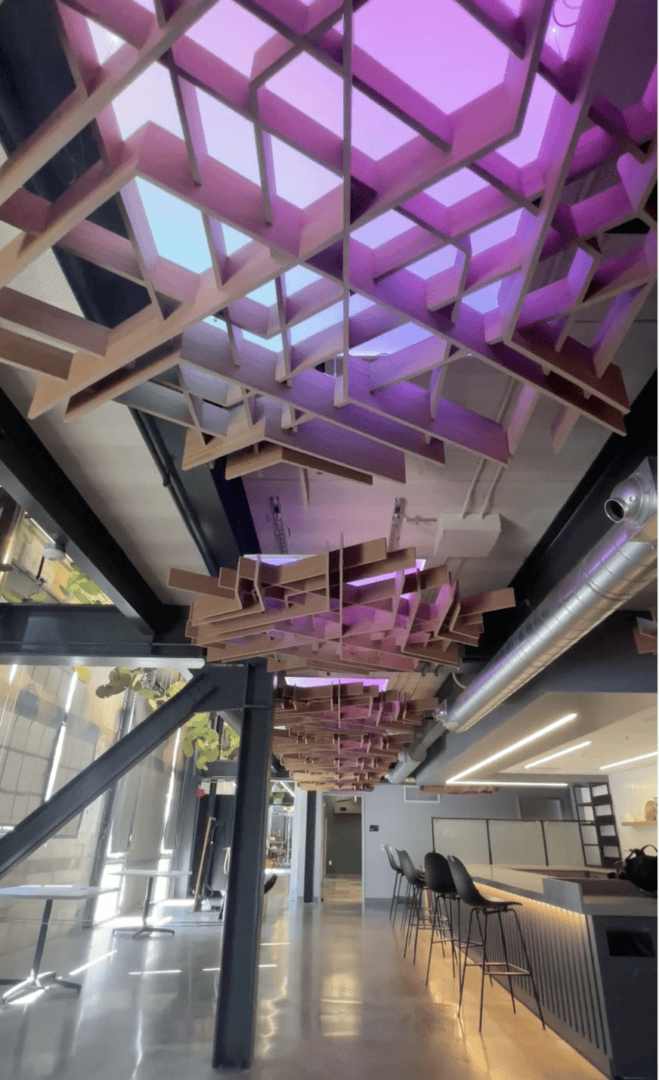
A thin, edge-lit panel that produces a uniform plane of light with no hot spots, such as the EOS LightPanel System. Point-source strips or dots telegraph through translucent stone as bright and dark patches; a diffused panel does not.
EOS LightPanels start around 1/4 inch thin, making them suitable for shallow setbacks behind stone, onyx, resin, and glass where depth is limited.
Yes. LightSlab ships flat and is field-cuttable on site to match the exact opening, and custom-shape panels are available for curved or irregular geometry.
Let's Talk About Your Project